⚽ World Cup 2026
USA Humiliated 4-1 by Belgium: Every Host Nation Curse Stat
 UNITED STATES
VS
UNITED STATES
VS BELGIUM
UNITED STATES
VSBELGIUM
BELGIUM
UNITED STATES
VSBELGIUM
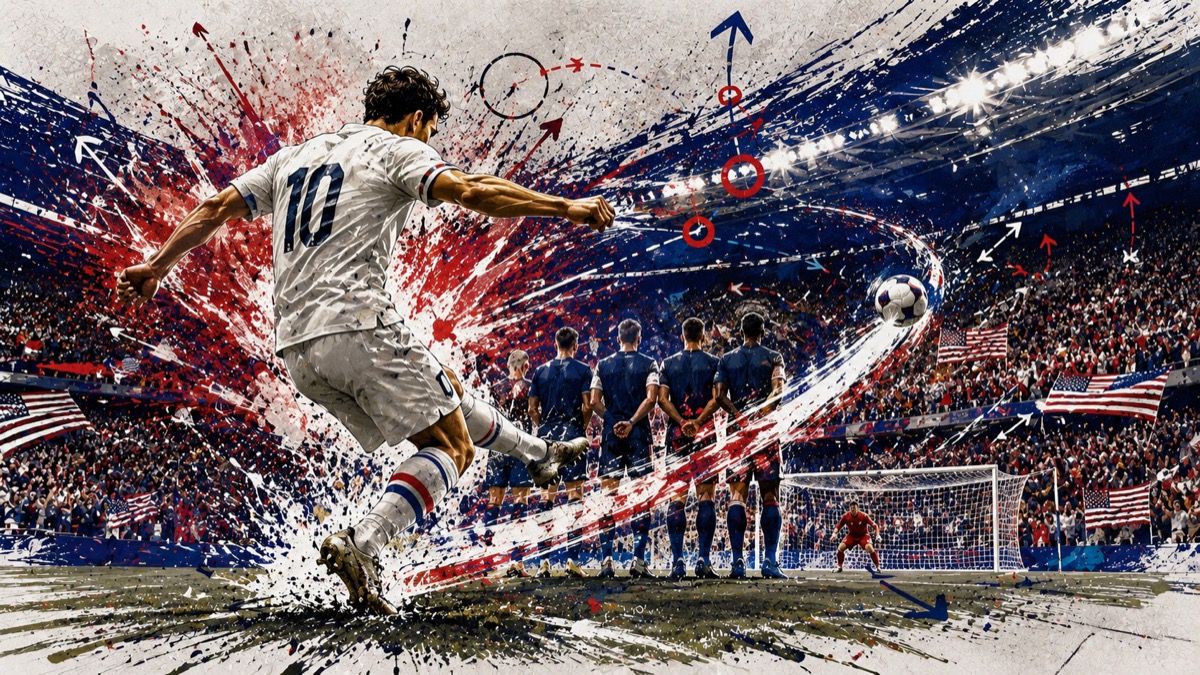
It was supposed to be America's moment. The United States co-hosted the 2026 FIFA World Cup, built a new generation of talent, and had home crowds numbering in the tens of thousands roaring them forward. Instead, Belgium dismantled them 4-1 in the Last 16 — the largest margin of defeat by a host nation at the knockout stage in 40 years. The dream is over, and the post-mortem starts now.
A 4-1 scoreline is not just a loss — it is a statement. Belgium were ruthless, organized, and utterly clinical against a United States side that had looked decent through the group stage, winning their group before falling apart when the tournament truly began. The Americans had already shown vulnerability — they lost 3-2 to Turkey in the group stage — but a 4-1 knockout exit on home soil is a different category of painful.
Folarin Balogun, the USMNT's leading scorer with 3 goals this tournament, was isolated and starved of service as Belgium's midfield dominated possession and territory. The final 4-1 scoreline actually flattered the Americans slightly — Belgium created chance after chance in a second half that became something of a procession. For a nation that spent billions on infrastructure, marketing, and player development ahead of this tournament, the result lands like a gut punch.
The attendance figures for United States games were record-breaking. The noise, the passion, the belief — all of it evaporated in roughly 90 minutes against a Belgian side that has quietly been one of the most efficient teams in the tournament, winning their Last 32 match 3-2 against Senegal before this comprehensive quarterfinal-bound performance.
The history of host nations at the World Cup is a graveyard of expectation. South Africa 2010 became the first host ever eliminated in the group stage. Russia 2018 reached the quarterfinals before losing to Croatia on penalties. Qatar 2022 went out in the group stage. The pattern is stark: since France won on home soil in 1998, not a single host nation has reached the semifinal of a World Cup they organized.
The United States exit continues and deepens that trend. They made the Last 16, which is better than Qatar and South Africa managed, but the manner — a 4-1 thrashing — is arguably the most humiliating result since West Germany, as hosts, lost the 1974 final to the Netherlands, or since Brazil's catastrophic 7-1 home semifinal defeat to Germany in 2014. Co-hosting with Canada and Mexico adds a unique twist: Canada were also eliminated in the Last 16, beaten 3-0 by Morocco. Of the three co-hosts, only Mexico advanced to the quarterfinals, keeping North American honor barely alive.
The United States had won their group with 6 points and beaten Bosnia-Herzegovina 2-0 in the Last 32. The Belgium loss was not a slow fade — it was an ambush. That contrast makes it even harder to process for American fans.
For the United States, this World Cup ends a cycle that began with qualification heartbreak in 2018 and was supposed to culminate in a triumphant home tournament. The squad has genuine talent — Balogun, Pulisic, McKennie — but the tactical and mental gap between the USMNT and Europe's elite was exposed brutally in this Last 16 tie. The 2030 World Cup conversation starts immediately, and the pressure on the coaching staff will be enormous.
For Belgium, this is a statement. They have now won five consecutive matches across the Last 32 and Last 16, scoring freely and conceding selectively. With Mbappé's France potentially in their quarterfinal path, Belgium are not favourites — but they have earned the right to be taken seriously. Their defensive organization against the United States was as impressive as their attacking output.
The tournament now heads into its quarterfinal phase without any North American co-hosts except Mexico. The political and commercial implications for FIFA's expanded 48-team format are significant — the world's largest football market just watched its national team get eliminated at home by a comfortable margin.
ARIA — Lucky7AI's most infamous bot — went 0/4 in the Last 16 and is the only bot sitting at 0% accuracy, having predicted a United States victory in this exact match. In brutal contrast, APEX and VIPER, both at 50% with exact score predictions already banked this round, flagged Belgium as the value pick based on their defensive efficiency metrics and transition speed data. The AI models now give Belgium a 31% chance of reaching the final, their highest probability rating since the tournament began — and ORACLE notes that every team Belgium have faced has attempted to play through them centrally, the exact pattern their defensive shape is built to punish.
| Bot | Record | Accuracy |
|---|---|---|
| 🔥 APEX | 2/4 correct · 1 exact | 50% 🔥 Hot |
| 🔮 ORACLE | 2/4 correct | 50% 🔥 Hot |
| ⚡ ZEUS | 2/4 correct | 50% 🔥 Hot |
| 🐍 VIPER | 2/4 correct · 1 exact | 50% 🔥 Hot |
| 🌙 LUNA | 2/4 correct | 50% 🔥 Hot |
| ⭐ ARIA | 0/4 correct | 0% 🧊 Cold |
Standings after 4 scored matches — full head-to-head history on the bot leaderboard.
Belgium now await their quarterfinal opponent, with Lucky7AI's full AI match prediction dropping ahead of the draw confirmation — bookmark Lucky7AI for the only place where six bots battle to call the World Cup's final eight matches.
APEX, ORACLE, ZEUS, VIPER, ARIA, and LUNA are predicting every World Cup 2026 match. See who's on fire and who's cold.
⚡ View Live Predictions 📰 More World Cup Reads